What to know
- Packaged naengmyeon noodles and chilled broth make the timing short and the flavor more dependable.
- Build the sauce around 2½ tablespoons gochujang, then balance heat, sweetness, and acidity.
- Follow the noodle package time first and rinse immediately in very cold water.
Safety checks
Packaged noodles, broth, gochujang, and soy sauce vary by maker. Check every product’s allergen label and ask the manufacturer about cross-contact when needed.
Sources: U.S. FDA — Food Allergies
Refrigerate the finished dish within two hours because it includes cooked egg and broth; use one hour when the temperature is above 90°F (32°C).
Responsibility: The cook is responsible for checking the actual product labels, holding temperature, and elapsed time.
Limitations: This recipe cannot guarantee individual allergy safety or refrigerator temperature. When in doubt, do not taste the food; discard it.
Checked:
How the flavor works
Gochujang provides sweetness and body; gochugaru adds aroma and a sharper heat.
Vinegar lightens the finish while maesil syrup adds gentle fruit acidity.
About 70 ml chilled broth loosens the sauce without turning the dish into soup.
Ingredients
Noodles and toppings
- 1 serving packaged naengmyeon noodles
- Julienned cucumber, as needed
- ½–1 hard-boiled egg
- 70 ml chilled naengmyeon broth
- A handful of julienned radish or Asian pear, optional
Spicy sauce
- 2½ tbsp gochujang
- 1 tbsp gochugaru
- 1 tbsp minced garlic
- 1 tbsp sugar
- ½ tbsp vinegar
- 1 tbsp maesil syrup
- ½ tbsp soy sauce
- ½ tbsp toasted sesame oil
- ½ tbsp sesame seeds
Instructions
-
Mix the sauce
Combine gochujang, gochugaru, garlic, sugar, vinegar, maesil syrup, soy sauce, sesame oil, and sesame seeds. Rest while preparing the noodles.
For less heat, halve the gochugaru; for more tang, increase vinegar to 1 tablespoon. -
Prepare the toppings
Julienne the cucumber and halve the boiled egg. Prepare radish or pear if using.
Thin cucumber strips blend into the sauce more evenly. -
Cook the noodles briefly
Loosen noodles gently in boiling water. Follow the package timing; if none is given, test a strand and remove it as soon as the firm center disappears.
Overcooking makes the noodles soft and sticky. -
Rinse until completely cold
Move the noodles straight into cold or ice water and rub gently to remove surface starch and heat. Drain thoroughly.
Remaining heat and starch make the finished sauce feel pasty. -
Toss with broth and sauce
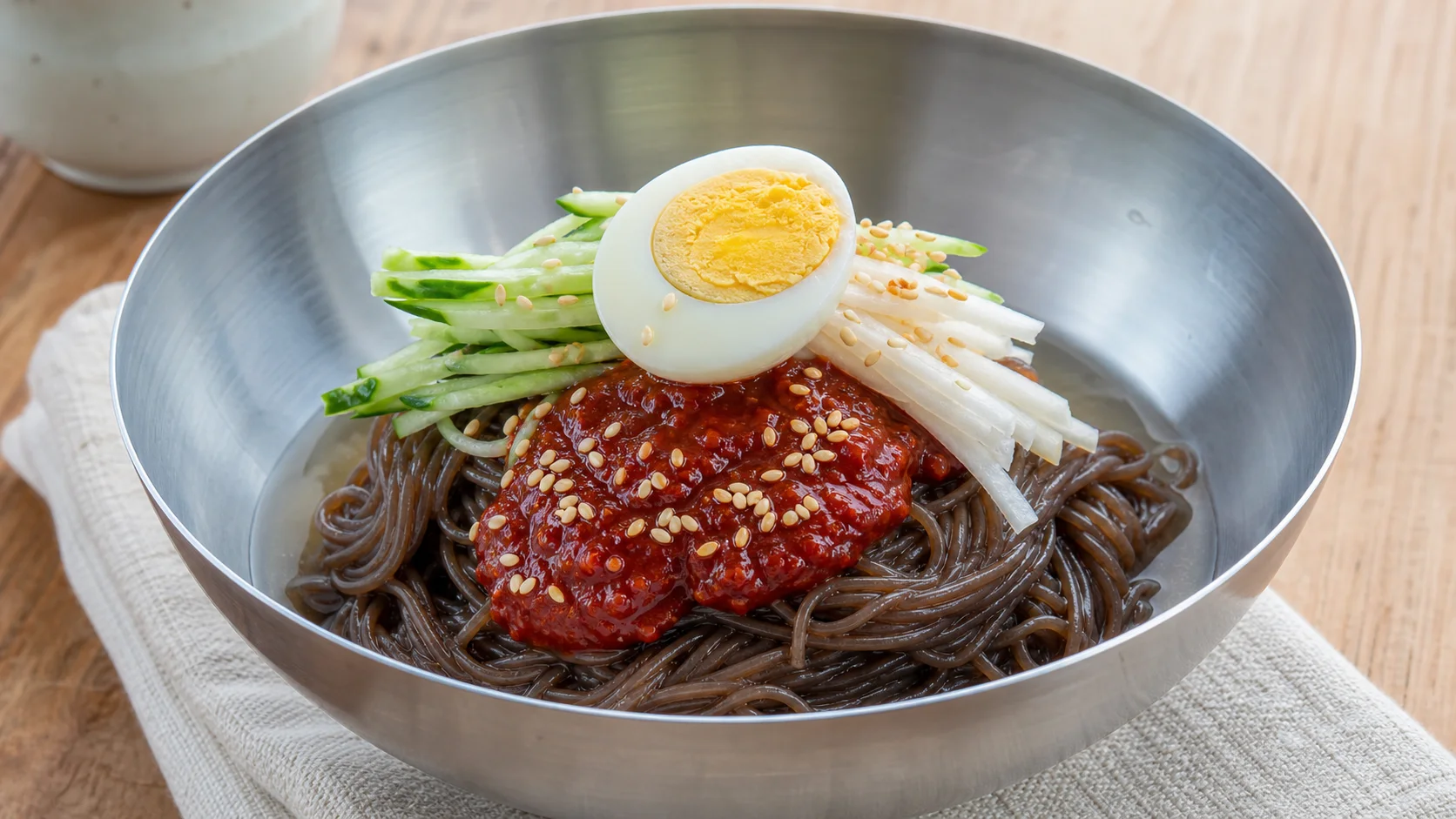
Place noodles in a bowl, add 70 ml chilled broth, then toss with the sauce. Finish with cucumber, egg, and optional radish or pear.
Start with 50 ml broth and add more if you prefer a thicker sauce.
Adjustments and storage
- Gochujang brands vary in salt and sweetness, so taste before adding more soy sauce.
- For multiple servings, add sesame oil and seeds just before serving.
Troubleshooting
Cook for less time and move them to cold water immediately.
Loosen it with cold broth one tablespoon at a time.
Adjust sugar, vinegar, and soy sauce separately rather than increasing everything.